Human Trafficking in Vietnam: From Traditional Routes to Digital Deception
Vietnam, with its strategic geographical location and deep integration into regional migration flows, is both a source and transit country for trafficking victims. This criminal enterprise has evolved from traditional cross-border smuggling into sophisticated digital operations, exploiting the country’s economic vulnerabilities and geographic position. They target the most vulnerable groups including women, children, ethnic minorities, impoverished workers, and more recently, men and members of the LGBTQI+ community.
Vietnamese authorities receive a baby who was trafficked to China. Photo: Ministry of Labour, Invalids and Social Affairs of Vietnam.

Digital Economy in Vietnam
The digital economy plays an increasingly crucial role in Vietnam’s development, as a significant driver of economic growth and modernisation. As industries and services rapidly shift towards digital platforms, Vietnam’s economy has experienced a notable transformation. The digital economy encompasses e-commerce, fintech, digital infrastructure, and digital services, providing new opportunities for innovation and competitiveness.
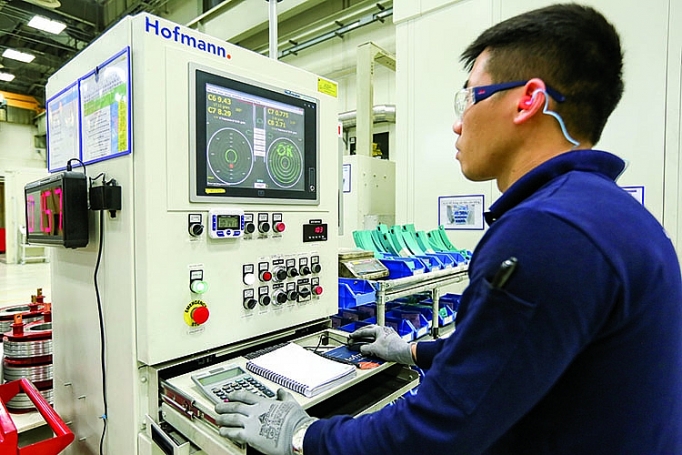
GE’s Hai Phong smart factory. Photo: congthuong.vn
Vietnam Waste Management
Vietnam, a rapidly developing nation in Southeast Asia, is undergoing significant economic growth, industrialisation, and urbanization. While these advancements have boosted the economy, they have also led to increased waste generation and complex waste management challenges. Effective waste management is crucial for maintaining environmental sustainability, protecting public health, and enhancing overall quality of life.
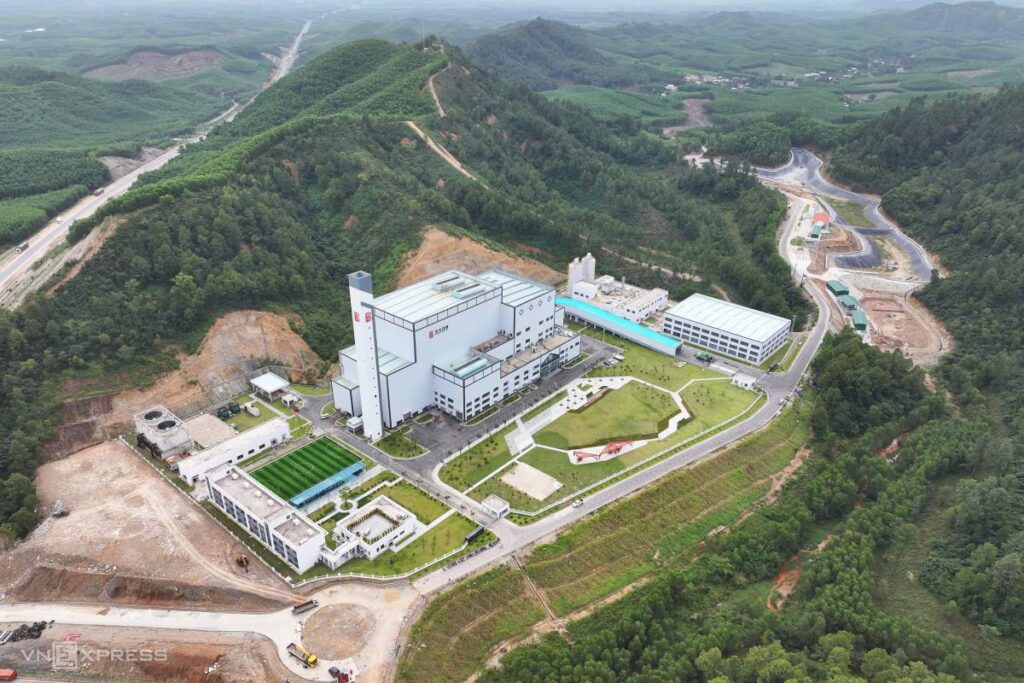
A waste treatment plant in Phu Son Commune in Huong Thuy Town, 22 km from Hue City, is being built. Photo by VNExpress.
A Landscape of Vietnam Labor and Migration
Vietnam’s economic boom in recent decades has significantly reshaped its labor market and migration patterns. Driven by robust growth, rapid urbanization, and shifting demographics, Vietnam’s workforce is undergoing a dynamic transformation. This article explores the current state of Vietnam’s labor force, its internal and international migration trends, and the complex challenges and opportunities these dynamics present.
Promoting ICT training for rural students. Photo by VIR

Urbanization in Vietnam
Vietnam’s economic transformation over the last three decades has been a remarkable success story. Urbanization has played a vital role in Vietnam’s success, with the share of the population living in towns and cities increasing from less than 20% in 1990 to more than 37.55% in 2022. The country has promoted prosperity through denser labor markets and agglomeration economies by concentrating people, skills, and economic activity in urban areas, thereby over half of the national GDP is contributed by urban areas.
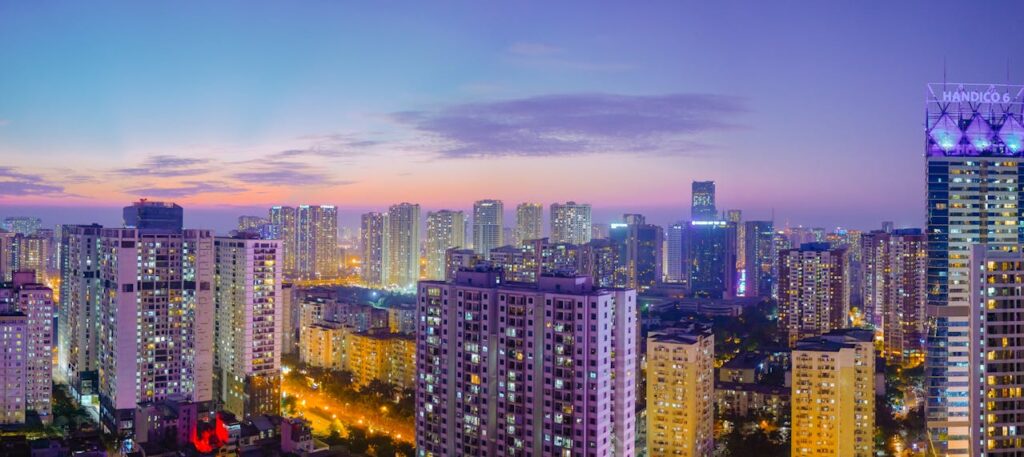
City Skyline during night time. Photo by Tuan Anh Dinh. Available on Pexels.
Green growth in Vietnam
The global pursuit of Green Growth has transformed into an essential agenda in a world grappling with escalating environmental degradation, climate change, and the depletion of finite resources. This concept strives to balance prosperity and ecological sustainability by decoupling economic growth from resource consumption and environmental harm. This article explores the definition and status of Green Growth and provides an understanding of Vietnam’s progress and role in the global green growth movement.
People holding the Globe. Photo by Cup of Couple. Available at Pexels.com.

Vietnam Digital Transformation Agenda
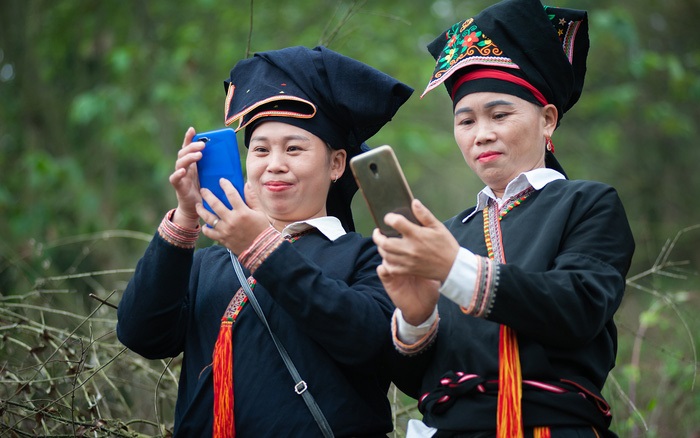
Vietnam is pushing toward Industry 4.0 with the government’s Digital Transformation Agenda (DTA) to leverage digital technologies to drive economic growth, improve governance, and promote social development. Digital transformation is being promoted as the key to unlocking the country’s two primary development goals: achieving net zero carbon emission by 2050 and becoming a high-income country by 2045.
Ethnic women using smartphones. Photo by Vietnam women portal.
Religions of Ethnic minorities in Vietnam
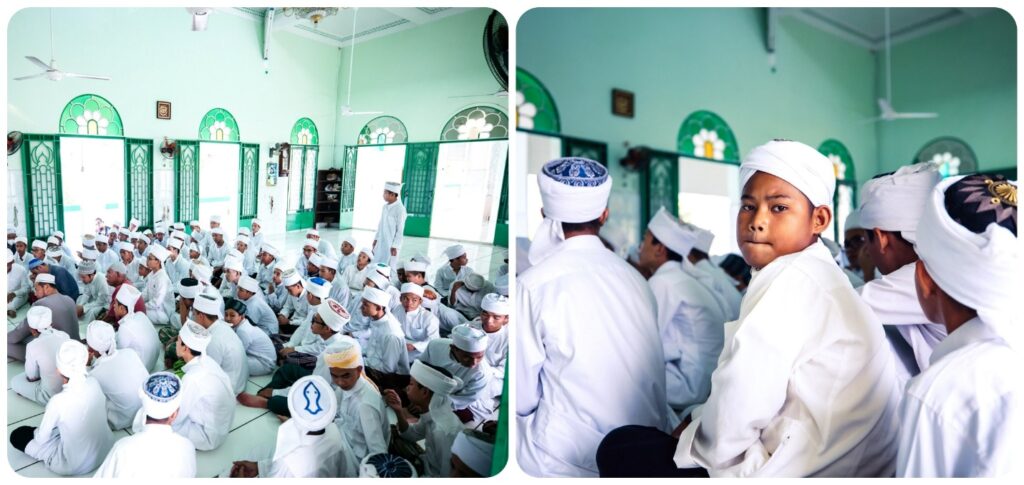
Most ethnic minorities in Vietnam currently follow polytheistic beliefs – often stated as no religion with 83.4% of the EM population, and only 16.6% follow specific religions. There are 3,025,174 people of 33 ethnic minority religious followers, distributed mainly in Buddhism with 1,448,366 followers; Catholicism with 548,130 followers; Protestantism with 874,359 followers; Islam with 85,452 followers; and other religions with 69,592 followers.
Islam followers in Cham ethnic group in An Giang province. Photo by Hochiminh city’s tourism magazine.
Overview of Religions in Vietnam
Vietnam is a multi-ethnic, multi-cultural and multi-religious country. Vietnam was among 12 countries in the world and six countries in the Asia Pacific region, recognized as having a very high degree of religious diversity under global religious diversity surveys by the Pew Forum Institute. This diversity in Vietnam resulted from the introduction, interference and fusion between indigenous religions formed in-country and imported overseas from other cultures. In the context of international integration, the level of religious diversity in Vietnam continues to improve.
Photo by Chinh Duc Le, available on Usplash.com.

Vietnam Personal Data Protection Decree
The Vietnamese government recently promulgated Decree 13/2023/ND-CP on the protection of personal data , which takes effect on 1 July 2023. This Decree is the primary legislation governing personal data protection in Vietnam, applying to both domestic and overseas entities directly involved in or related to the processing of personal data in Vietnam, including those processing personal data of Vietnamese customers and those utilizing infrastructure in Vietnam to conduct such activities.
Photo by Antoni Shkraba, available on pexel.com.

Foreign Direct Investment in Vietnam
Vietnam officially opened for Foreign Direct Investment (FDI) with the introduction of the Law on Foreign Investment in 1987. The attraction of FDI to Vietnam was significant by 2007 when Vietnam joined the World Trade Organisation. From that time onward, the flow of FDI to Vietnam grew strong and quickly. In 2020, Vietnam was among the 20 most attractive destinations for FDI globally. FDI has been a crucial driver of Vietnam’s recent economic success.
High-rise buildings in the city. Photo by Huynh An. Available on pexels.com.

Infrastructure
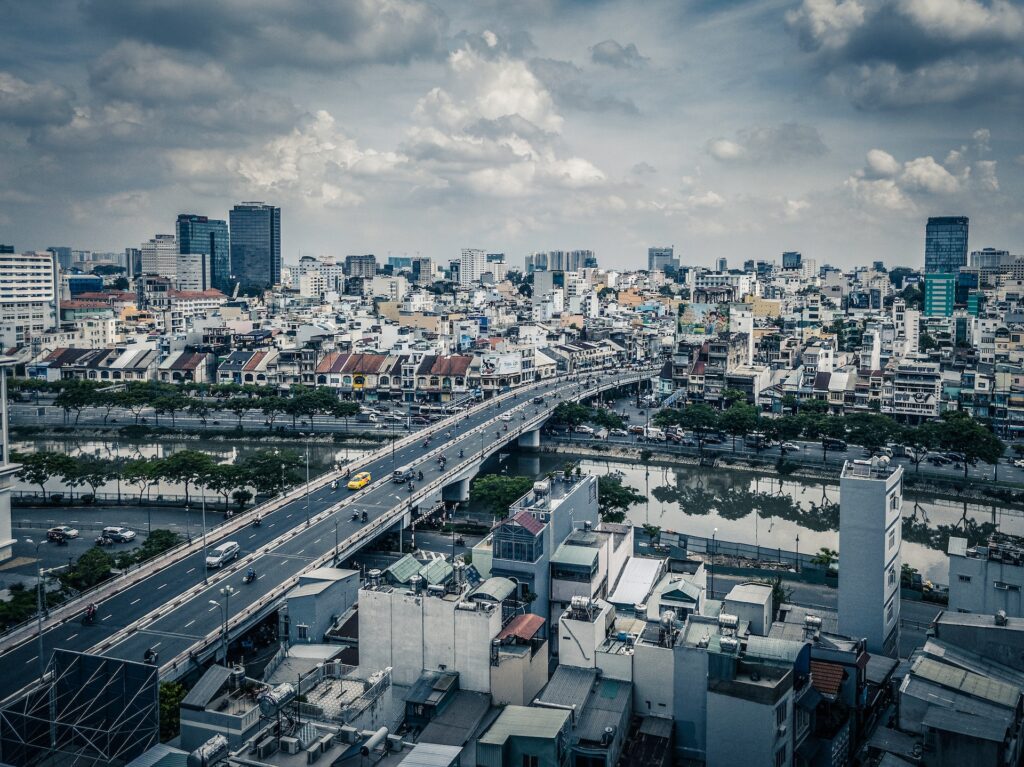
Investment in public infrastructure has been one of the key driving forces for Vietnam’s economic development over recent decades. Infrastructure accounted for 53% of total Official Development Assistance (ODA) received between 2010-2017. Vietnam has heavily invested in transportation, particularly roads, airports, and seaports. Vietnam’s public and private investment in infrastructure reached 5.7% of GDP in recent years, the highest in Southeast Asia and second highest in Asia after only China.
Hochiminh on the rise. Photo by Tuan Nguyen, available on Unsplash.
Vietnam Energy Overview
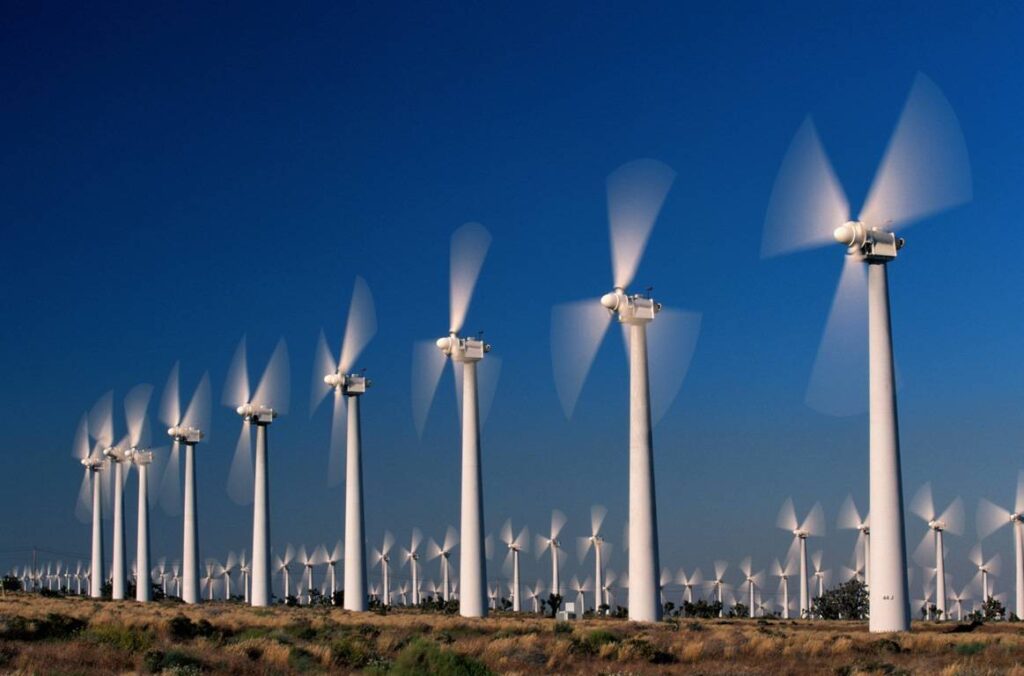
In 2020, 82.97% of Vietnam’s energy consumption came from fossil fuels. Vietnam relies primarily on coal to meet its energy needs, with coal making 51.4% of energy consumption. Because it is known that energy production and consumption from fossil fuels is the leading cause of global greenhouse gas emissions and climate change, there has been a push to shift to an energy mix dominated by low-carbon energy sources. However, growing energy consumption due to population and income increases makes this energy transition much more difficult, and Vietnam is not an exception.
Windmill field in Binh Thuan province| Photo from triphunter.vn
Vietnam Ethnic group Profile
Vietnam is one of the most ethnically diverse countries in the world, given its 54 recognized ethnic groups cohabiting in a relatively small landmass. Only seven of these groups—Kinh, Tay, Thai, H’mong, Muong, Nung, and Khmer—have populations over one million, while up to 12 ethnic groups count fewer than 10,000 members, 5 count fewer than 1,000 people including the Brau, O Du, Romam, Si La, and Pu Peo.
A visualization provides basic information about the 54 ethnic groups living in Vietnam, highlighting selected distinctive cultural and spiritual features of each.
A stamp collection of 54 Vietnamese Ethnic Group issued in 2005 | Image provided by the Vietnam Stamp Company

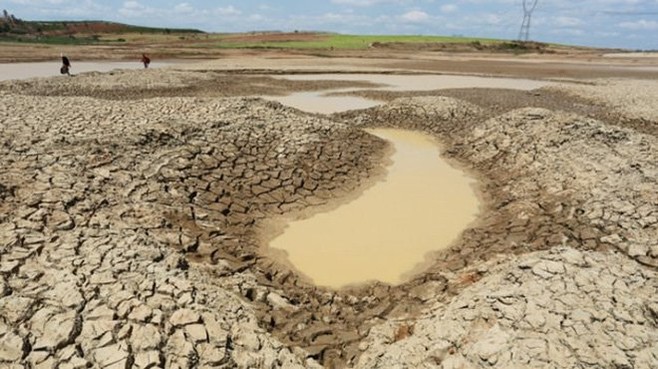
Drought
Mekong Delta of Vietnam has recently faced the most severe periods of drought and saline water intrusion in the last 100 years—notably in 2015–2016 and even more devastatingly in 2019–2020. Dry season droughts have become increasingly severe year over year, forcing the Government to declare a state of emergency and issue a call for international support. Increased salinity hit 10 out of 13 provinces in the Mekong Delta during the 2019 and 2020 seasons, affecting 58,000 hectares (ha) of rice, 6,650 ha of fruit trees, 1,241 ha of vegetables, and 8,715 ha of aquaculture. Up to 96,000 households or 430,000 people faced a shortage of daily use water.
Photo from moitruongvadothi.vn.